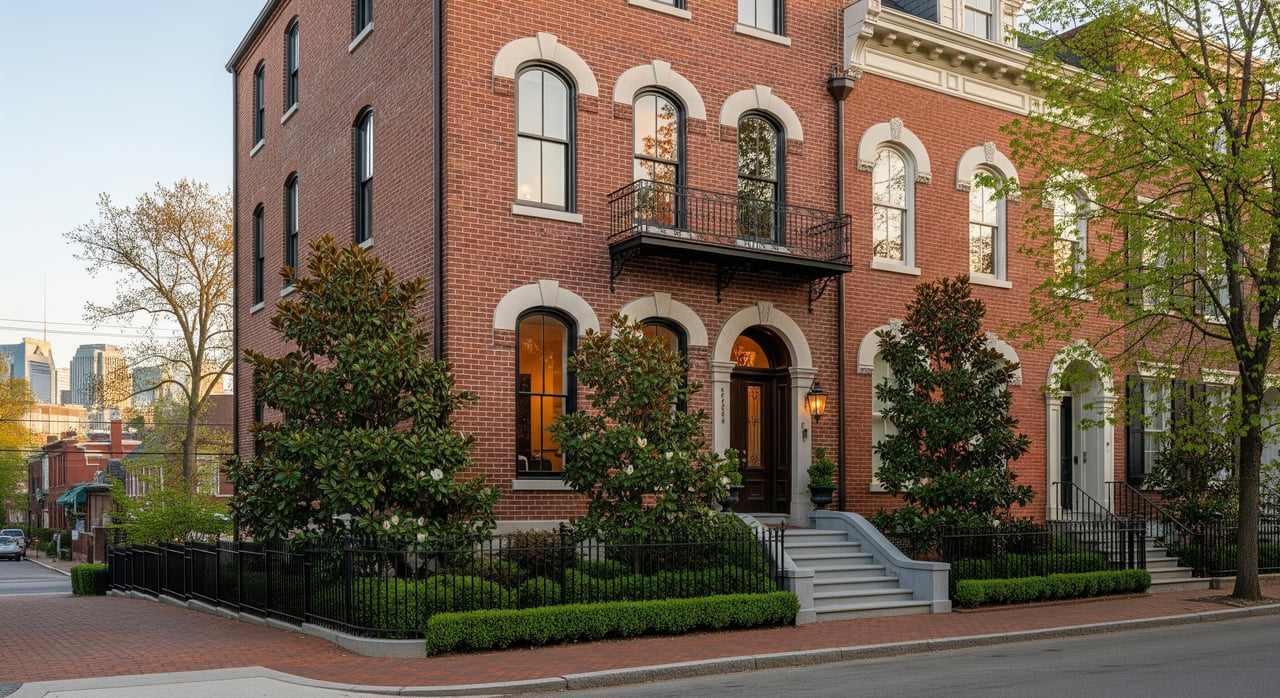
Nashville Housing Market Overview in Davidson County
December 18, 2025
December 18, 2025
Do the weekly headlines about Nashville’s housing market leave you wondering what they actually mean for your next move? If you are thinking about buying or selling in Davidson County, the right metrics can turn noise into clarity. In this plain-English guide, you will learn how to read the numbers that matter, what they signal in different neighborhoods and price ranges, and how seasonality shapes your timing. Let’s dive in.
Months of inventory tells you how long it would take to sell all current active listings at the current pace of sales. The formula is simple: MOI = active listings divided by average monthly closed sales. As a rule of thumb, a balanced market is roughly 4 to 6 months. Less than 4 months usually favors sellers, and more than 6 months favors buyers.
Use multi-month averages to reduce noise. A few high-priced listings can inflate inventory without reflecting demand in lower price tiers, so always view MOI by neighborhood and price band.
Absorption rate is the flip side of MOI. It measures the percentage of active inventory sold each month. The formula is monthly closed sales divided by active listings, or 1 divided by MOI. Higher absorption means faster turnover. For example, a 20 percent absorption rate equals about 5 months of inventory.
Like MOI, absorption depends on the time window and price segment. Short windows can swing a lot, so check 3 to 12-month rolling views.
Days on market is the typical time from listing to contract or acceptance. Some systems report days to contract while others use days to close, so confirm which one you are looking at. Shorter DOM usually signals stronger demand.
DOM averages can be skewed by a few slow movers. Median DOM and rolling averages tend to be more reliable. Also watch for withdrawn and relisted homes that reset the clock.
The list-to-sale price ratio is the sale price divided by the last list price, expressed as a percentage. Ratios above 100 percent suggest over-asking outcomes and multiple offers on average. Ratios between 95 and 100 percent point to negotiated discounts. Below 95 percent suggests buyers have more leverage.
Pricing strategies matter. New construction and renovated homes may be priced differently, and intentional underpricing can push ratios higher. Use median ratios and compare by price tier.
Median prices are usually better than averages because outliers do not distort them as much. Pair the median sales price with typical tiers, such as entry, mid, and upper price ranges, because behavior can differ by tier. For neighborhood analysis, use 6 to 12 months of data or rolling averages to keep sample sizes meaningful.
If Davidson County has 1,200 active listings and 300 closed sales in a month, MOI is 1,200 divided by 300, which equals 4 months. The absorption rate is 300 divided by 1,200, which equals 25 percent per month. These are illustrative only. Local numbers change, so always pull the latest data.
Davidson County includes the downtown core, denser inner neighborhoods, midtown, suburban pockets, and areas with historic housing. Each behaves differently. Downtown condos can carry higher supply and price sensitivity. Single-family homes in established neighborhoods often have tighter inventory and lower MOI. New subdivisions or infill can increase supply quickly within specific submarkets.
When you analyze the market, look by housing type and neighborhood, not just countywide totals.
Employment growth in healthcare, tech, higher education, music and entertainment, and corporate relocations supports in-migration and home demand. Short-term rental activity can shift owner-occupied supply in tourist areas. Building permits, zoning, and preservation rules can limit new supply in central neighborhoods, while outlying parts of Davidson and nearby counties absorb more new single-family construction.
When jobs are strong and supply is limited, you tend to see lower MOI, higher list-to-sale ratios, and shorter DOM. When new construction arrives in a specific price range or area, MOI can rise there even if other segments stay tight. Mortgage rate changes show up quickly: rising rates often lengthen DOM and lower list-to-sale ratios, while falling rates can tighten inventory and speed up sales.
Nashville broadly follows a familiar cycle. Activity ramps up from late winter through spring, typically February to May. Early summer can stay busy, while late summer sometimes eases as families plan around school. Fall generally cools, and winter is the slowest period, especially December and January.
School calendars, weather, and the financial year all influence timing. Many sellers aim for spring, and construction schedules often push closings into spring and summer. Nashville’s winters are relatively mild, so the slowdown is usually less severe than in colder regions, but it still shows up in the numbers.
Compare each month to the same month last year to account for normal seasonal swings. Use rolling 3 or 12-month averages to separate trend from short-term blips. If you list in spring, you may see more buyers and stronger ratios, but you will also face more competition. Fall and winter can offer fewer buyers but less competing inventory, which can help a well-priced home stand out.
Local MLS data and the Greater Nashville REALTORS monthly reports provide the clearest view for Davidson County and its submarkets. Broader context from Tennessee and national Realtor organizations can help you interpret methods and trends. Public dashboards from well-known research portals are useful for big-picture trend lines, while Census building permits show the pipeline of new supply. Mortgage rate trackers help explain demand shifts that influence MOI and DOM.
When you want more than a headline, request an agent’s neighborhood report that shows your exact price range, property type, and an appropriate time window. That is how you move from general talk to actionable strategy.
If you want an expert read on Davidson County’s submarkets or a marketing plan that meets the moment, connect with Joseph Goodman for a neighborhood-level report and a valuation-first listing strategy.
Get in touch with Joseph to discuss your real estate needs to sell and find your home today! He’s eager to help you every step of the way.
115 N Castle Heights Blvd Lebanon TN 37087